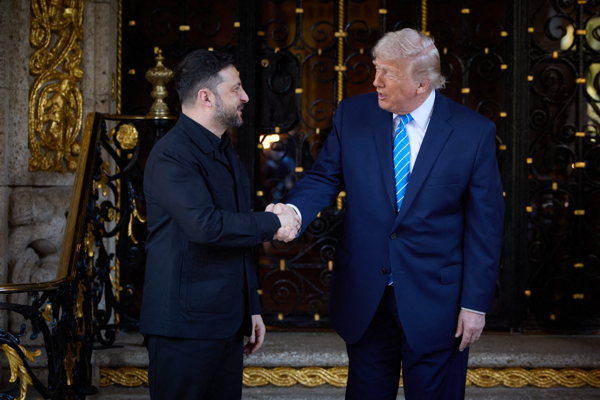
European countries agree to deploy forces to Ukraine if peace deal is reached

Ukraine’s European allies will send troops to the country if a "credible" ceasefire with Russia is reached, according to a declaration of intent signed in Paris on Tuesday. Prime minister Bart De Wever confirmed Belgium will make its navy and air force available to the peacekeeping force.
Representatives of the 35 countries in the coalition met with Ukrainian president Volodymyr Zelensky and US envoys Steve Witkoff and Jared Kushner in the French capital to discuss the security guarantees Ukraine should receive from its allies after a potential truce with Russia. The talks concluded with the signing of a statement, which French president Emmanuel Macron described as "legally and politically binding".
The most significant provision concerns the creation of a "multinational force" to be deployed if a ceasefire is agreed with Russia. The US would "support" the force, which is intended to help uphold a "just and lasting" peace in Ukraine.
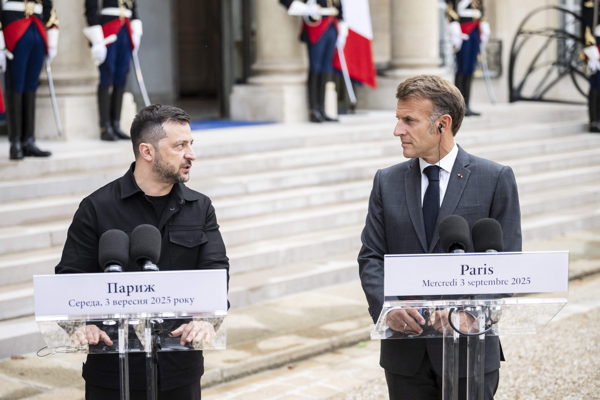

Not all European countries are willing to send troops to Ukraine. The UK and France confirmed they would do so, while Italy and Poland have already ruled out deploying their own soldiers. Any German deployment would be limited to a NATO member neighbouring Ukraine, chancellor Friedrich Merz said.
Belgium to contribute troops
Belgium will meet its commitments within the coalition, De Wever confirmed. Speaking on the current affairs programme Terzake on Tuesday evening, he said this would include support from its navy and air force. Any contribution involving land forces would focus on training Ukrainian soldiers inside Ukraine.
De Wever, who attended the Paris meeting, welcomed what he described as a renewed US commitment to securing peace. "We pledged certain capabilities, but without a US backstop that deployment was not feasible," he said. "That commitment is now on paper."
According to De Wever, the United States now appears committed to a 20-point plan that he described as "an acceptable peace for Ukraine". He called this "progress, certainly to keep the transatlantic alliance intact and not divided, because that is of course what Russia wants".
© PHOTO LUDOVIC MARIN / AFP
Related news