EU summit: Flemish minister president stresses need for “feasible ETS rules for industry”

Flemish minister president Matthias Diependaele is pleased that the European Commission is taking industry into account in its review of the EU’s Emissions Trading System (ETS). He made these comments on Friday, following a series of measures aimed at reducing energy prices in both the short and long term, proposed yesterday at the EU summit. Diependaele emphasised the need for “feasible ETS rules so that our industry can become more sustainable without sacrificing competitiveness”.
High energy prices have long been high on the European agenda, and the war in the Middle East and attacks on energy infrastructure are driving prices even higher and increasing the risk of future supply problems.
One of the measures that could offer relief is an adjustment to the system of CO2 emission allowances for industry (ETS1), on which opinions within the EU are deeply divided. A group of ten countries is pushing for urgent reform, whilst other member states do not want to weaken the system, which has already ensured that the EU has had to import far fewer fossil fuels.
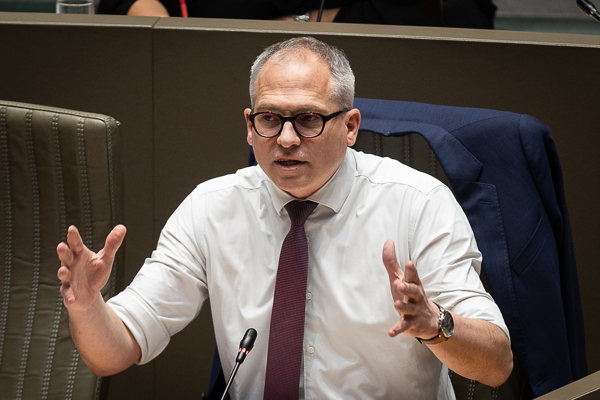

The system will remain in place, but the Commission will adjust the benchmarks for free allowances and increase the “firepower” of the stabilisation reserve. By the summer, it aims to present a review of the ETS, with a “more realistic trajectory” for reducing the total number of emission allowances and also the retention of free allowances after 2035.
On Friday, Diependale described this as an “important signal and a step in the right direction” that the Commission has indicated it will take industry concerns into account when setting the new benchmarks or reference standards for free allowances. “We continue to advocate for feasible ETS rules so that our industry can become more sustainable without sacrificing competitiveness,” said the minister president.
"This is an important signal and a step in the right direction”
“During last Monday’s Flemish Industry Forum, we made it clear that the current ETS trajectory for energy-intensive sectors is in danger of derailing and is unrealistic,” he added. “The fact that the European Commission is now announcing its intention to adjust the ETS trajectory after 2030 and the benchmarks shows that our message has got through.”
Specific deadlines
Tackling high energy prices had already been identified as a priority at an informal summit in February in Alden Biesen, where leaders outlined a strategy to strengthen the competitiveness of European industry. This is now being translated into specific projects with deadlines in the final conclusions.
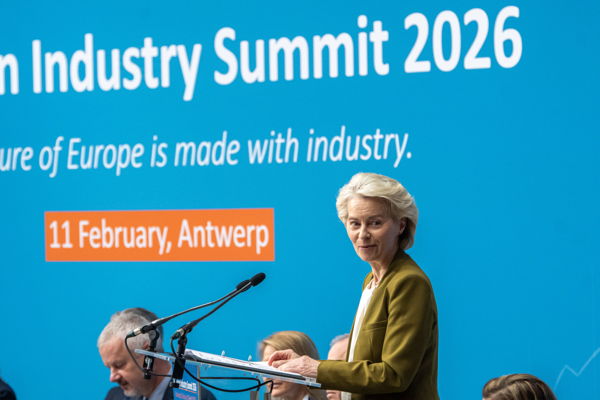

This strategy includes initiatives to remove persistent barriers to cross-border trade in goods and services within the European single market and to better harness the potential of a unified European market. Reducing red tape for businesses also remains high on the agenda.
The leaders are also calling on their ministers and the European Parliament to reach a compromise on the Industrial Accelerator Act by the end of 2026. A final major project is the integration of capital markets, which is necessary to tap into dormant savings to fund the hundreds of billions of euros in investment that the European economy will require in the coming years.
#FlandersNewsService | Flemish minister president Matthias Diependaele at the European Industry Summit in Antwerp in February 2026 © BELGA PHOTO JONAS ROOSENS