EU migration pact: Belgium pays 13m euros to avoid additional asylum seekers
.jpg)
European ministers have reached an agreement on the fair distribution of asylum seekers in Europe. Belgium would have to take in additional asylum seekers who arrive in, for example, Greece or Italy, but opts for the alternative allowed by the EU: it will pay around 13 million euros to member states under heavy migration pressure.
The new European asylum and migration pact, which will come into force in June 2026, includes a solidarity mechanism for the annual redistribution of asylum seekers from member states under heavy migration pressure.
The European Commission developed an allocation formula based on scientific research. Four countries are under the greatest migration pressure: Greece, Cyprus, Italy and Spain. Other member states will be obliged to take in asylum seekers from these four countries next year.

There is also an intermediate group: six countries that have already received many more asylum seekers in recent years will not have to participate, or only in part. These include Austria, Croatia and Poland.
It has been agreed that 30,000 asylum seekers per year will be eligible for resettlement. But as the agreement will only take effect from 12 June, there will be fewer in 2026. Because 70 per cent of arrivals occur in the second half of the year, it has been agreed that 21,000 asylum seekers from those four countries will be eligible for resettlement in 2026.
"This is a realistic and supportive way to contribute to European balance"
The 16 European countries that are obliged to contribute to the solidarity mechanism may refuse the asylum seekers. They can opt for a financial contribution or another form of solidarity instead. That is what Belgium will do as the government does not want to take in asylum seekers from other countries. It was decided on Monday that the country would pay 12.9 million euros for this purpose.
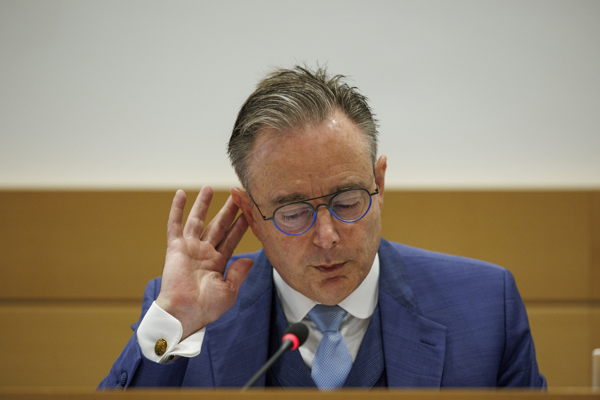
“Our commitment cannot be endless,” said Belgian minister for Asylum and Migration Anneleen Van Bossuyt. “Through financial contributions, we can help other member states to take structural measures so we can reduce the influx into the European Union. This is a realistic and supportive way to contribute to European balance.”

The member states also reached an agreement on a stricter return policy. Many migrants whose asylum applications have been rejected currently remain in Europe. The EU wants to take stricter action against this.
Belgian minister for Asylum and Migration Anneleen Van Bossuyt © PHOTO HANS LUCAS COLLECTION
Related news