EU member states approve Mersocur free trade agreement

EU member states have given the green light to the free trade agreement between the EU and the Mercosur trade bloc. The decision paves the way for its official signing, which is expected to take place on Monday in Paraguay.
European Commission president Ursula von der Leyen had to postpone the signing in mid-December on the sidelines of the last European summit in Brussels, when the text of the agreement failed to achieve a qualified majority.
In recent days, she has proposed budgetary and regulatory changes to the highly sensitive agricultural section in order to win over Italy, which had previously objected to the text.
There were enough members of the Committee of Permanent Representatives to support the legal texts submitted by the Commission. This follows a second agreement in principle signed at the end of 2024 by Von der Leyen with the leaders of Brazil, Argentina, Paraguay and Uruguay, after an initial agreement in 2019 that proved unsatisfactory.
France, Poland, Austria, Hungary and Ireland voted against on Friday.

Discussed for more than 25 years, the deal will constitute the largest free trade area ever created by the EU in terms of population, covering more than 700 million people. At member state level, it had to be approved by at least 15 of the 27 countries representing 65 per cent of the population. It will be subject to a written procedure by the EU Council of Ministers later today. In the absence of agreement among its various governments, Belgium is abstaining.
The trade part of the agreement, which is the exclusive competence of the EU, still needs to be ratified by the European Parliament with a simple majority.
Belgian employers’ organisations FEB, Voka, AKT, Beci, Unizo and AVED welcomed the outcome.
“This agreement opens up new markets for Belgian companies and strengthens our competitiveness on the international stage,” they said. “In a world marked by geopolitical tensions, this is an important step towards further anchoring the European and Belgian economies in global value chains, particularly those in Latin America.”
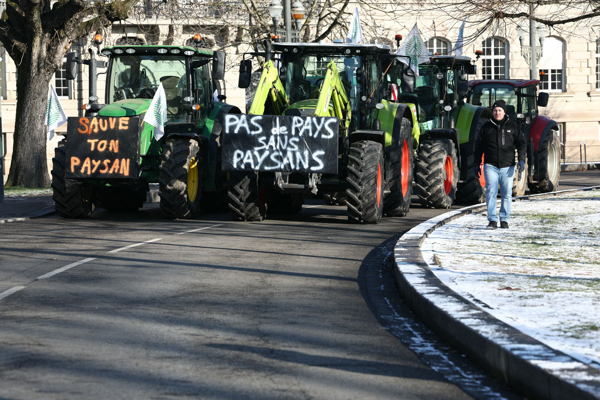
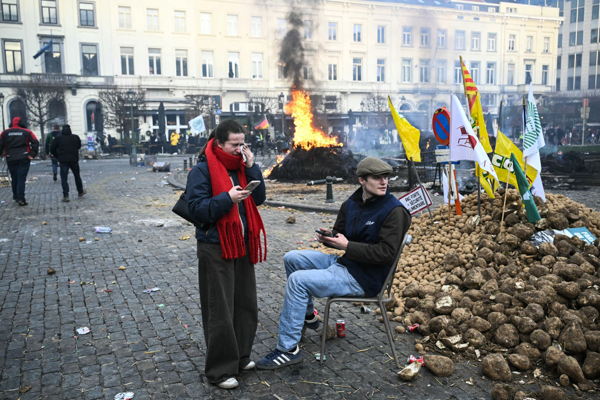
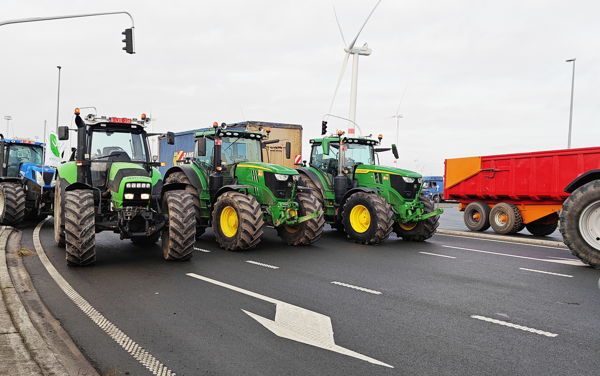
Farmers block traffic outside Paris in protest at the Mercosur trade deal, 9 January 2026 © PHOTO THOMAS SAMSON / AFP
Related news