EU considers talks with Taliban in Brussels over Afghan returns

The European Commission is preparing to invite representatives of the Taliban to Brussels for technical talks on the return of Afghan nationals without legal residence in the EU, a highly sensitive initiative in which Belgium is playing an active role.
According to European officials, the discussions would focus on practical cooperation, including the identification of individuals and the issuance of travel documents for returns. A follow-up mission in Brussels is expected before the summer, after a first technical visit to Kabul in January involving European representatives and Belgium’s Immigration Office.
Belgium, alongside 19 other Member States including Germany, Austria and the Netherlands, has called on the Commission to develop concrete measures by the end of 2026 to facilitate both voluntary and forced returns, particularly for individuals convicted of crimes. Minister for asylum and migration Anneleen Van Bossuyt (N-VA) confirmed in parliament that Belgium remains closely involved at the European level.
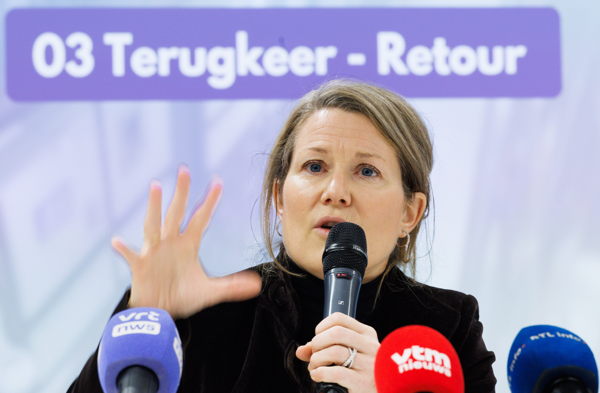

Van Bossuyt confirmed that any approach must comply with human rights obligations. "Afghans who were not granted protection or residence must return whenever possible, but there must always be an assessment under Article 3 of the European Convention on Human Rights," she said, referring to the prohibition of torture and inhuman treatment. The planned Brussels meeting is, in her view, “an important and necessary step” towards a coordinated European solution, “without recognising this regime”.
At the same time, the issue is exposing divisions within the Belgian government. The cabinet of foreign minister Maxime Prévot has made clear that Belgium itself will not invite Taliban representatives. However, as the host country of the EU institutions, it may be obliged to issue visas if the invitation comes from the European Commission.
Human rights concerns
The prospect of engaging with the Taliban remains highly controversial given the regime’s record on human rights, including restrictions on women and girls and repression of dissent. Critics warn that even technical contacts risk conferring legitimacy.
Opposition parties have voiced strong objections. Groen MP Matti Vandemaele argued that engaging with the Taliban “normalises and legitimises that regime,” while Vlaams Belang’s Francesca Van Belleghem criticised what she described as “organised hypocrisy” within the government.
Despite the controversy, several EU countries are pushing for a coordinated return mechanism, reflecting the continued pressure on asylum systems. Afghans were among the largest groups of asylum seekers in multiple Member States last year, and some countries have already resumed deportations of convicted individuals.
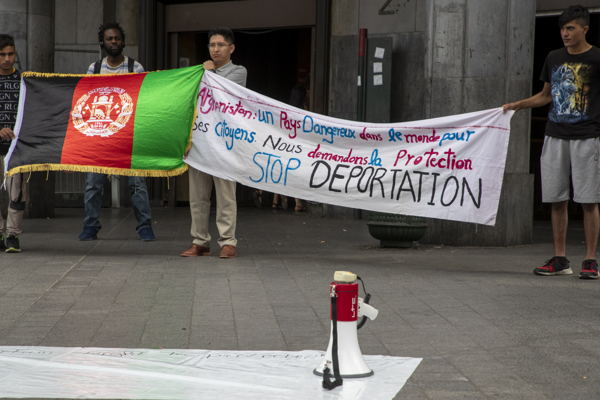

For now, discussions remain ongoing at European level, with Belgium maintaining a coordinating role as the dossier develops.
A Taliban security personnel keeps watch as Afghan Muslims offer Eid al-Fitr prayers, which marks the end of the holy fasting month of Ramadan, at the Kharqa Sharif mosque in Kandahar on March 19, 2026. © PHOTO SANAULLAH SEIAM / AFP
Related news