EU and India conclude negotiations on landmark free trade agreement

The European Union and India have concluded negotiations for an agreement to create a free trade area of some 2 billion people. The deal – the largest ever concluded by either side – was formally announced on Tuesday.
Negotiations began in 2007, were suspended in 2013 and restarted in 2022. The EU and India already trade 180 billion euros in goods and services every year, and the European Commission says the agreement should double exports of goods to India by 2032 by reducing tariffs by 96.6 per cent.
According to the Commission, this is the most ambitious market opening India has ever granted to a trading partner. It should give a significant competitive advantage to key sectors like agri-food, which will get privileged access to a market of 1.45 billion people with an annual GDP of 3.4 trillion euros.
"We have sent a signal to the world that rules-based cooperation still delivers great outcomes"
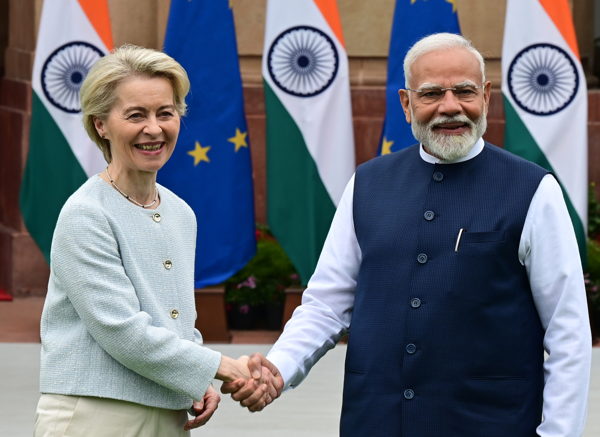
“The EU and India make history today, deepening the partnership between the world’s biggest democracies. We have created a free trade zone of 2 billion people, with both sides set to gain economically,” said European Commission president Ursula von der Leyen.
“We have sent a signal to the world that rules-based cooperation still delivers great outcomes.”
Tariffs on agri-food exports currently average 36 per cent and can be as high as 150 per cent. After the signing of the agreement, tariffs on wine will fall from 150 to a maximum of 30 per cent, and those on beer from 110 to 50 per cent. On vegetable oils, fruit juices and non-alcoholic beer and processed food, the tariffs will disappear.

The EU will retain its tariffs on sensitive products such as beef, sugar, rice, chicken and milk powder, and the agreement includes a safeguard mechanism in case of market disruptions.
“Front and centre to these negotiations was maximising new opportunities for our unmatched European products, while protecting European farmers,” said Christophe Hansen, Commissioner for Agriculture and Food.
“As in any trade agreement, our high food safety standards are fully maintained. The safety of EU consumers is non-negotiable.”
Tariffs on cars will gradually fall from 110 per cent to 10 per cent, with a quota of 250,000 vehicles a year. Tariffs of up to 44 per cent on machinery, up to 22 per cent on chemicals and 11 per cent on pharmaceuticals will be largely eliminated.
"As in any trade agreement, our high food safety standards are fully maintained. The safety of EU consumers is non-negotiable"
Before the FTA with India can be signed, the Commission must first get the green light from member states. After that, both the member states and the European Parliament still have to approve the agreement itself, and India also has to ratify it.
The announcement comes shortly after the Commission and the Mercosur trading bloc signed a free trade agreement, negotiated over 25 years.
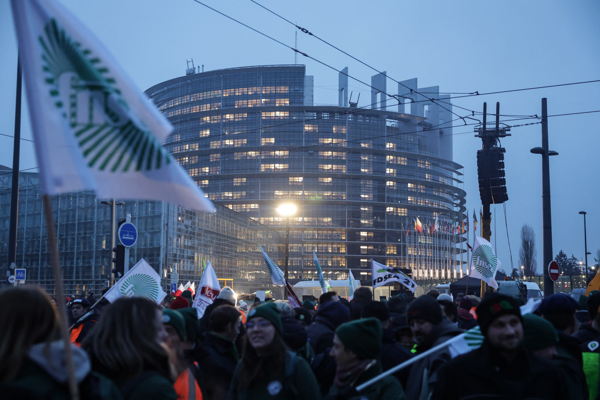

After a difficult approval process by member states due to stiff opposition from the agricultural sector, the agreement was sent to the European Court of Justice by the European Parliament. The Commission retains the option of provisionally applying the agreement while awaiting the court’s ruling.
The deal with India was welcomed by the Federation of Belgian Enterprises.
“This agreement offers the necessary opportunities for diversification, especially in the current geopolitical and trade environment characterised by numerous tensions,” said delegate director Pieter Timmermans.
“Trade policy diversification is crucial for an open economy. But consistent action remains essential: the ongoing saga around the Mercosur agreement undermines the credibility of the European trade agenda, just when partners like India clearly want to make progress.”
Indian prime minister Narendra Modi with European Commission president Ursula von der Leyen and European Council president Antonio Costa in New Delhi, 27 January 2026 © PHOTO SAJJAD HUSSAIN / AFP
Related news