ESA expands Galileo navigation system with two new satellites

Two additional satellites were launched on Wednesday for Galileo, Europe’s civilian satellite navigation system. With the latest launch, Galileo will soon operate 29 active satellites, further strengthening coverage and reliability for users worldwide, the European Space Agency (ESA) said.
The satellites were launched from Europe’s spaceport in French Guiana aboard an Ariane 6 rocket. After a flight of nearly four hours, they were successfully released into medium Earth orbit at an altitude of around 23,000 kilometres. Both satellites are in good condition and their solar panels have been deployed.
Galileo has been operational since 2016 and has steadily expanded its capabilities. According to the EU, the satellite system is four times more accurate than the US GPS system, with navigation accuracy of up to one metre.
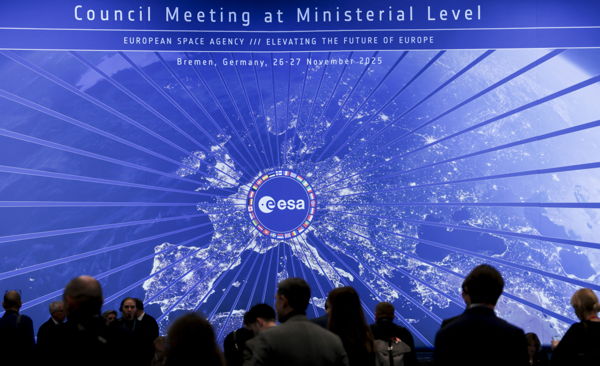

"Galileo stands as the world’s most accurate global navigation satellite system, and today we have increased its reliability and robustness," said ESA director general Josef Aschbacher. "Its successful launch (...) reaffirms not only Europe’s ambition, but also its industrial capability to design, build, launch and operate critical space infrastructure autonomously."
Wednesday’s mission marked the first Galileo launch with Ariane 6 , Europe’s new heavy-lift launcher, its fifth flight overall. Unlike SpaceX's rockets, Ariane 6 is not reusable. The ESA said in October it aims to develop its own reusable system.
Two further launches, each carrying two Galileo satellites, are planned in the near future. After that, the ESA is expected to begin deploying second-generation Galileo satellites, which should further improve the system’s robustness and performance.
PHOTO © Ronan LIETAR / AFP
Related news