Education minister proposes "teachers’ council" to address administrative burden in education

Zuhal Demir, the Flemish minister of education, justice and employment (N-VA), wants to establish a “teachers’ council” of 124 teachers who will work with the government to map the planning and administrative burdens in education. She announced the initiative on Sunday on VTM NIEUWS.
Demir said the council would clarify exactly what constitutes the planning burden teachers face. “They will specify exactly what that workload is: what we should no longer do, what is pointless, and what currently takes up too much time, time that should actually be spent on the students,” she said.

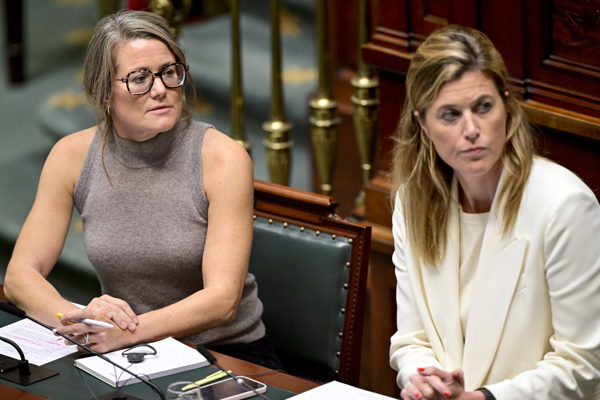
© BELGA PHOTO NICOLAS MAETERLINCK
The initiative forms part of ongoing discussions about a career pact aimed at making the teaching profession more attractive in Flanders.
“We need to make progress on this, because in Flanders we have been discussing how to make the profession more attractive for thirty years. One of the elements in this is indeed the planning burden,” Demir said.
The proposed council would mirror the Flemish parliament's size, bringing together 124 teachers from both primary and secondary education. According to Demir, teachers themselves are best placed to define the problem and identify which tasks are unnecessary or overly time-consuming.
“When it comes to planning burdens, they are best placed to work with the government to specifically define what that burden is: what we no longer need to do, what is pointless, and what currently takes up too much time—time that should actually be spent on the students.”
Reform of teacher training
Demir also outlined plans to overhaul teacher training in Flanders starting in the 2027–2028 academic year. The reforms are intended to strengthen the quality of education by improving how future teachers are prepared.
Under the proposed changes, all teacher training programmes will include a mandatory Dutch language proficiency test. Students who fail the test will still be allowed to start their studies, but must pass it by the end of their first year. Those who do not pass will not be allowed to begin their internship.
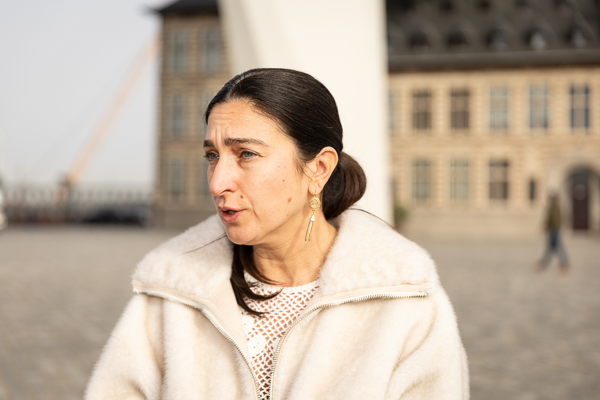

“Strong education starts with strong teachers,” Demir said. “That's why we require students starting teacher training to take a mandatory Dutch language proficiency test. Those who fail are still allowed to start the program and can remediate. However, they must have passed by the end of the first year. If not, they are not allowed to start their internship.”
Plans to reform teacher training have been under discussion in Flanders for some time and were also included in the coalition agreement.
Prison overcrowding and ankle monitors
During the same interview, Demir addressed questions about prison overcrowding. The federal government has suggested expanding the use of electronic ankle monitors as a way to reduce the number of inmates, some of whom are currently forced to sleep on the floor.
“I'd like to help, but I'm not God the Father. If a judge pronounces a sentence and orders a serious criminal to go to jail, we can't automatically impose an ankle monitor,” Demir said.
She said there are regular consultations with Prime Minister Bart De Wever. “He also knows that Flanders' limits aren't endless. This has to do with resources and personnel, but also with our IT system.”
Flemish services are already monitoring around 2,000 people with ankle monitors, partly due to an emergency law adopted at the federal level.
“That’s a remarkable number,” Demir said. “If thousands more are added, our IT system will crash. That system isn't designed for that.”
Demir also criticised attempts to shift responsibility to the regional level. “I know that Annelies Verlinden is very keen to shift all the federal misery to Flanders, but there are limits.” According to Demir, other solutions should also be explored, including expanding prison capacity.
#FlandersNewsService | © BELGA PHOTO NICOLAS MAETERLINCK
Related news