Brussels attacks 10 years on: frustration, reflection and progress

“As a victim, I feel that some progress has been made, but we are ultimately almost exactly where we were 10 years ago,” says Walter Benjamin, a survivor of the 22 March 2016 suicide bombing at Brussels Airport.
He was speaking at a press conference on Thursday organised by the victims’ association Life for Brussels, which represents 700 victims of terrorism. The non-profit has painted an unflattering picture of the support provided to victims, a decade after the twin attacks at Maelbeek metro station and Zaventem in which 32 people were killed and hundreds injured.
Few of the recommendations made by the commission set up after the bombings have actually been implemented. Only seven out of 46 have been put into practice, nine have not come to fruition and 30 have been shelved.

On Thursday, it emerged that the pensions service had wrongly recovered thousands of euros of the reparation pension awarded to victims and the families of those killed, which it has apologised for. While this pension is normally paid for life, minor children of victims only receive it until they turn 18. Life for Brussels is calling on the government to eliminate this discrepancy.
“I am one of the 57 people who received a letter saying I had been overpaid; they are demanding a sum of around 130,000 or 150,000 euros,” said Benjamin. “I haven’t slept since I received that letter. We’re seen as a burden on the state; we cost money.”
He called on the government to take action: “Get a move on and show that you actually care about your citizens.”
"I haven’t slept since I received that letter. We’re seen as a burden on the state; we cost money"
Prime minister Bart De Wever promised last week to improve support for victims of terrorism. He acknowledged that governments often responded in a “very predictable way” after a terrorist attack, providing medical care, taking security measures and trying to ensure daily life can resume. “For many victims, however, this is when the most difficult time begins” he said.
Meanwhile, the Red Cross says it is now much better equipped to intervene effectively in a terrorist attack than it was 10 years ago.
“There has been a genuine commitment, both from the authorities and on our part, to develop new tools to deal with this,” spokesperson Gilles De Schepper told Belga.
On 22 March 2016, more than 600 Red Cross volunteers were mobilised to respond at Zaventem and Maelbeek, as well as at other locations where bomb alerts had been triggered.

In the months that followed, “we asked ourselves a lot of questions to see how we could have done even better, even though we can consider that we did our utmost with the resources available to us at the time”, De Schepper said.
Ten years on, the organisation has invested in new vehicles equipped with “attack-focused” medical kits. Training has been stepped up: all emergency personnel are now trained in managing massive haemorrhages, rapidly triaging victims and dressing open wounds.
"When I walk down Rue de la Loi, I inevitably think about it; I see certain scenes again"
Finally, communication systems have been improved. They enable the rapid mobilisation of large numbers of volunteers, as well as tracking victims from initial response through to the point of care.
Though he has not suffered any psychological after-effects and was able to resume his work as a first-aider quickly, De Schepper is still deeply affected by the events of 22 March. “When I walk down Rue de la Loi, I inevitably think about it; I see certain scenes again,” he says. “Life has gone on, but we don’t forget.”
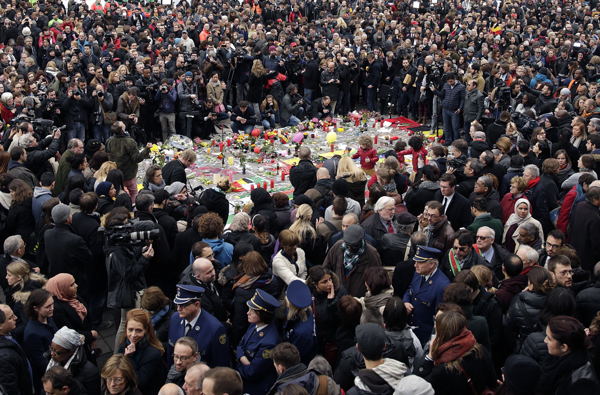
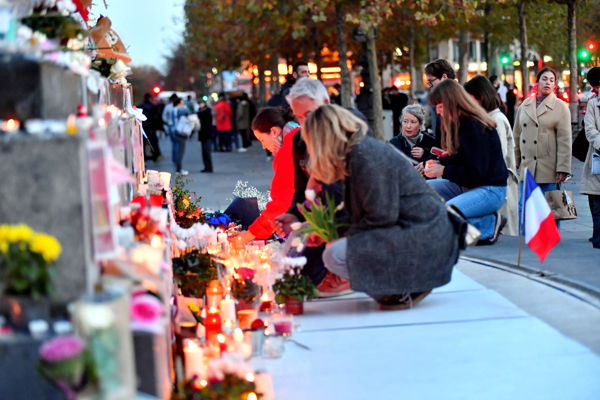
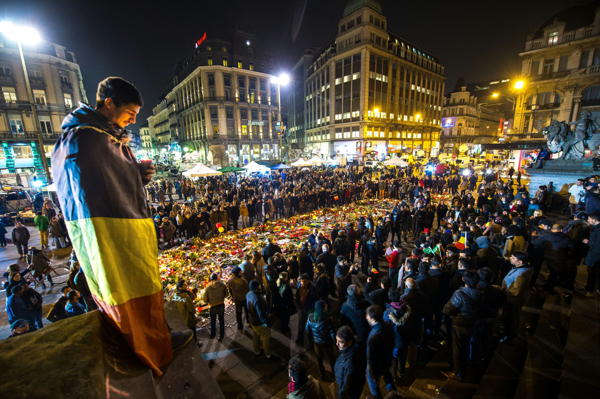
A Belgian flag reading We Are All Brussels at a makeshift memorial at Place de la Bourse in central Brussels after the twin suicide bombings at Maelbeek metro station and Brussels Airport, 22 March 2016 © PHOTO KENZO TRIBOUILLARD / AFP
Related news