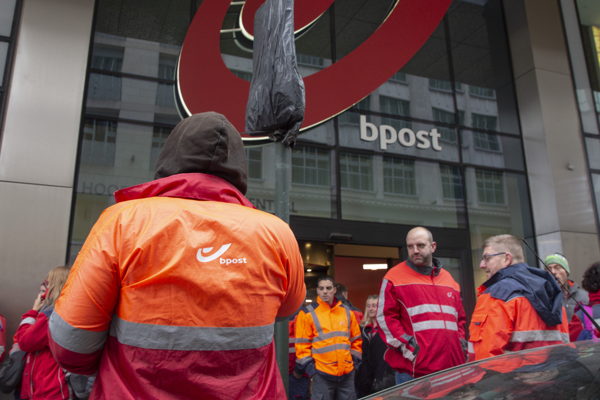
Bpost and unions reach collective agreement, but row over working hours persists

Management and trade unions at Bpost have reached a new collective agreement covering this year and next, the Belgian postal operator announced on Thursday evening. The deal comes after more than a month of negotiations and a six-week strike over the company's plans to shift working hours to later in the day.
The collective agreement includes job security guarantees, protection against unfair dismissal, higher meal vouchers and a one-off bonus. It also covers internal redeployment, leave arrangements and end-of-career provisions. In addition, meal vouchers will rise from 8 to 10 euros.
Bpost describes the deal as "an important step towards further securing the company's future". The collective agreement gives the company the scope "to remain a healthy and forward-looking business, capable of responding flexibly to the expectations of customers and citizens," CEO Chris Peeters added.
Later hours to go ahead
Separately from the collective agreement, Bpost's transformation plan, under which postmen will start their rounds later in order to also handle parcel deliveries, remains on track. According to management, the change is necessary to adapt to the realities of the delivery market.
From September, most postal workers will begin at 8.45 am instead of the current 7.00 am. The company can implement this change without union agreement, but the unions have made clear they remain firmly opposed.
"There is no support among staff for the later hours," Geert Cools of the socialist postal workers' union said. Asked whether fresh protests could follow, Cools was cautious. "The postmen know the later hours are coming, but we've already seen the worst of the discontent. I don't have a crystal ball, but I don't expect new industrial action straight away."
Stéphane Daussaint of the French-speaking Christian trade union CSC struck a more pessimistic note. He warned of practical as well as social consequences, pointing out that postal vehicles would now be on the roads in the middle of rush hour, and said that he was "unable to guarantee social peace at this moment."
© BELGA PHOTO ERIC LALMAND
Related news