Belgium’s contemporary comic artists: Jeroen Janssen

Belgian comics are famous worldwide thanks to giants from the past like Hergé and Franquin, but many local artists have followed in their footsteps. In this series, Belga English draws the profiles of four contemporary Dutch-speaking comic artists and graphic novelists with international appeal. Today: Jeroen Janssen, “Belgium’s slowest journalist”.
After studying free graphics at the Sint-Lucas School of Arts in Ghent, Jeroen Janssen took on all kinds of jobs. He worked as a postman, teacher, driver, gardener and library assistant and worked with psychiatric patients. But after moving to Rwanda to work as an art teacher at the beginning of the 1990s, he started translating his impressions into drawings.
In 1994, the genocide forced him and his family to flee. The traumatic experience pushed him to create the graphic novel Muzungu, Sluipend Gif in Rwanda, a semi-autobiographical account about his life in Rwanda until the genocide, which won him critical acclaim.
"The stories are real, there’s no temptation to make anything up. Reality is usually fascinating enough"
He would reflect again on this period in Abadaringi, for which he spoke with former students, acquaintances and friends who had survived the horror.
Abadaringi was developed like a sketchbook, in which Janssen drew landscapes and settings he encountered and made portraits of the people he spoke to. It’s an exceptional example of the documentary style that earned him the nickname of “Belgium’s slowest journalist”.
“I use the methods of a journalist but translate my story into a comic strip,” he explained to Gazet van Antwerpen. “Unlike most comic artists, I don’t draw my characters from my imagination. The stories are real, there’s no temptation to make anything up. Reality is usually fascinating enough.”

In the later graphic novel Mijn Kameraad Che Guevara (My Comrade Che Guevara), a collaboration with journalist Hilde Baele, Janssen documents Guevara’s time in the Democratic Republic of Congo in 1965. Baele and Janssen travelled to Congo and Cuba and talked with people who once knew Guevara. They even tracked down Jérôme Sebasoni, who was Guevara’s guide in Africa.
For Guaranda, Janssen travelled to the eponymous city in Ecuador, but he has also documented life closer to home. He has devoted two books to the fate of Doel, a village that was threatened with demolition for more than half a century to make room for the growing Port of Antwerp. Only fairly recently, it was decided to save the village.
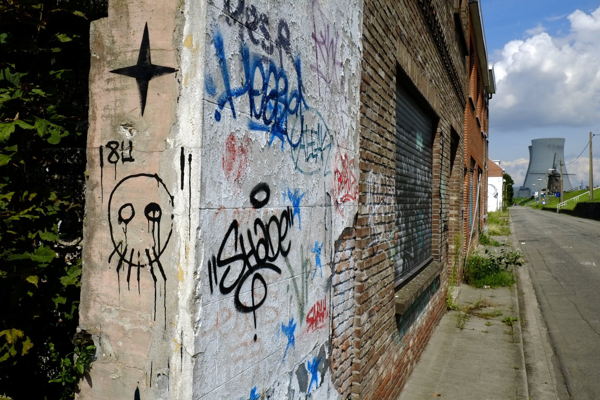

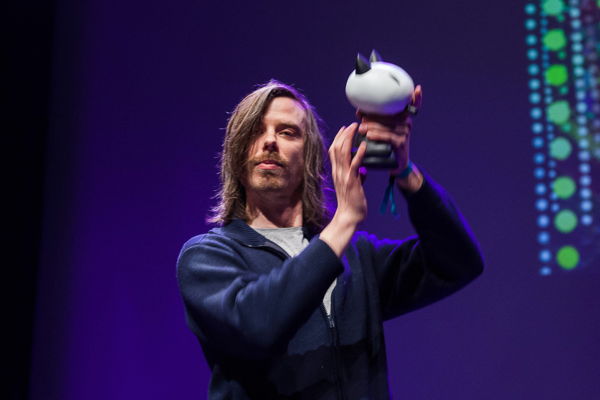
He published Doel, a reflection of his conversations with locals, in 2013. In 2018, the year he received the Flemish Bronzen Adhemar oeuvre award, Janssen published a new book about the topic: Er Wonen Nog Mensen: Tekenen Van Leven in Doel (There Are Still People There).
In it, he documents the stories of both old and new residents, who talked to him about the past of the village and expressed their hopes and fears for its future.
Janssen teamed up with Dutch writer Pieter van Oudheusden for several books, after meeting him at an award ceremony in the Netherlands. The duo won most acclaim with their series about African folklore character Bakamé the hare. Bakamé is a trickster, partly inspired by the Flemish medieval poem about Reynard the Fox. There are similarities with animal tales from other continents.

In 2020, Janssen published Posthumus (Posthumous). It was his final collaboration with Van Oudheusden, who died in 2013. The book is a dreamy ode to the life and music of 19th-century Austrian composer Franz Schubert, with certain creative liberties, using a variety of techniques and background colours.
For his next project, Janssen worked with Belgian-Iranian journalist and multimedia artist Arezoo Morado. In Landloos als de wind (Restless as the Wind), the authors sketch portraits of Ledeberg – a district on the fringes of Ghent hemmed in by a railway line and a major highway – and of its inhabitants.
#FlandersNewsService | © IMAGE JEROEN JANSSEN / OOGACHTEND
Related news