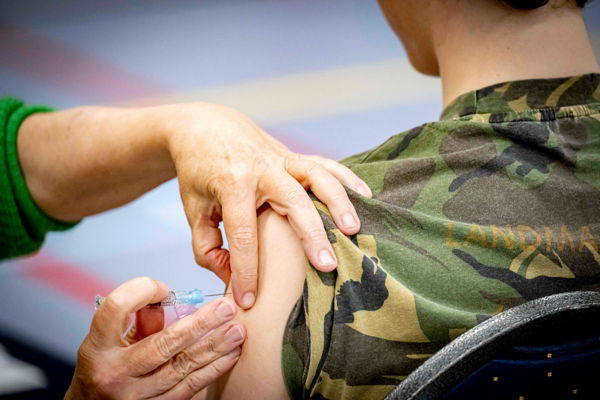
Belgium tests response to Ebola-like outbreak scenario in national exercise
.jpg)
Belgium's Health ministry has conducted an exercise with a range of partner organisations to test Belgium’s response to an outbreak of an unknown disease. Sciensano, regional health authorities, rail operator SNCB, Brussels Airport, the army and the World Health Organization all took part. The exercise was carried out under the supervision of the European Centre for Disease Prevention and Control (ECDC).
It is the first time Belgium has organised such a national-level exercise with international partners. Initiated by the FPS Public Health, it aimed to test procedures for viral haemorrhagic fevers, including those caused by Ebola and Marburg viruses.
The exercise was based on a fictional scenario involving two NGO workers returning from South Sudan, both infected with Ebola. One develops symptoms and returns home to Malmedy. The other, still asymptomatic, travels back to Antwerp before visiting his mother in a residential care facility. He forgets his phone, leaving authorities unable to contact or trace him.
Participants received information in a fragmented way and were expected to respond as they would in real life. The procedures will now be evaluated to identify areas for improvement.

"We clearly saw that all participants took part very actively and interacted with each other," said Bart Hoorelbeke, organiser of the exercise. Hoorelbeke developed the scenario with the ECDC. "The insightful and critical comments regarding cross-sector coordination and information exchange will be incorporated into an improved plan in the near future."
According to Paul Riley of the ECDC, this is only the second time such an exercise has been organised at a national level at the request of a member state. "The first exercise was held at the request of Malta. We organise such exercises quite often, but usually with several EU member states at the same time," he said.
Broad collaboration
The exercise was conducted with a range of partners, including Brussels Airport Company, Civil Protection, Defence, the FPS Mobility, high-level isolation units at University Hospital Antwerp (UZA) and Saint-Pierre University Hospital in Brussels, Infrabel, Doctors Without Borders, the National Crisis Centre, the Institute of Tropical Medicine Antwerp, the Federal Police, AViQ, Ostbelgien, Vivalis, Saniport and the WHO.
According to Dirk Ramaekers, chair of the management committee of the FPS Public Health, Belgium has drawn important lessons from the coronavirus crisis. "We are now better prepared for outbreaks, but you can never be completely ready," he said.
The Broken Signal exercise in Brussels, 17 March 2026 © BELGA PHOTO KAAT COSTERS
Related news