Belgium still has work to do as a human rights champion, says Amnesty International

Belgium presents itself internationally as a champion of human rights, but must act more consistently to uphold that role, according to Amnesty International. The organisation made the assessment in its 2025 annual report, The State of the World’s Human Rights, which reviews the situation in 144 countries.
The report depicts a world marked by unlawful wars, economic coercion and widespread impunity. According to Amnesty, countries capable of preventing such abuses have too often failed to act. "In the worst case, they were complicit; in the best case, they appeased," said director-general Agnès Callamard at a press conference on Monday. "The era of the predators has arrived, and with it, the era of the cowards."
Against this backdrop, Amnesty argues that the international community "needs countries and leaders who not only speak fine words about human rights, but also act on them consistently," said Wies De Graeve, director of Amnesty International Flanders. He noted that Belgium had, in some respects, lived up to its reputation, citing "the explicit support of the ministers of justice and foreign affairs for the International Criminal Court, and by taking measures to stop arms transfers to Israel."
However, Amnesty points to gaps between commitments and delivery. "In September 2025, the Belgian government—under considerable pressure from the population—also took additional steps to combat the genocide in Gaza," De Graeve said. "But since the announcement, we are still waiting for the implementation of the decision to ban products originating from territory illegally occupied by Israel from the Belgian market." The organisation also said it is "concerned about the plans of the regions to relax the rules for arms exports."
Domestic concerns: asylum, prisons and protest rights
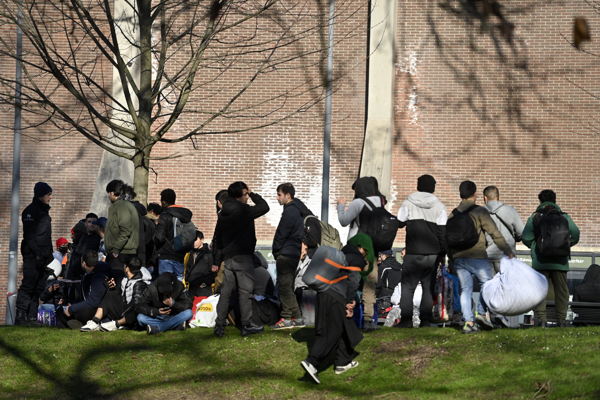
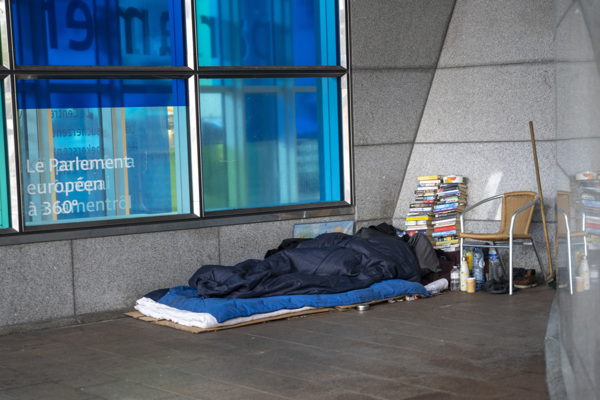
The report also points to a range of domestic issues, highlighting concrete examples. On asylum, Amnesty refers to rulings by the European Court of Human Rights (ECHR), which found Belgium in violation of fundamental rights after several asylum seekers were left without accommodation or material assistance for months, despite court orders. In one case, individuals were forced to live on the streets for up to 338 days, with the court citing breaches including the prohibition of inhuman or degrading treatment.

Concerns are also raised over prison conditions. Belgian prisons remain severely overcrowded, with the number of detainees far exceeding official capacity. According to union figures, hundreds of inmates are currently sleeping on mattresses on the floor, underlining the structural pressure on the system.
Amnesty further criticises restrictions on peaceful protest, delays to reforms on access to abortion, and continued subsidies for the fossil fuel industry.
© BELGA PHOTO LAURIE DIEFFEMBACQ
Related news