Belgium particularly vulnerable to geopolitical tensions and disinformation

Risks such as geopolitical tensions, social fragmentation, misinformation and disinformation weigh heavily on Belgian businesses because the country has an export-oriented economy, an analysis of the World Economic Forum’s Global Risks Report finds.
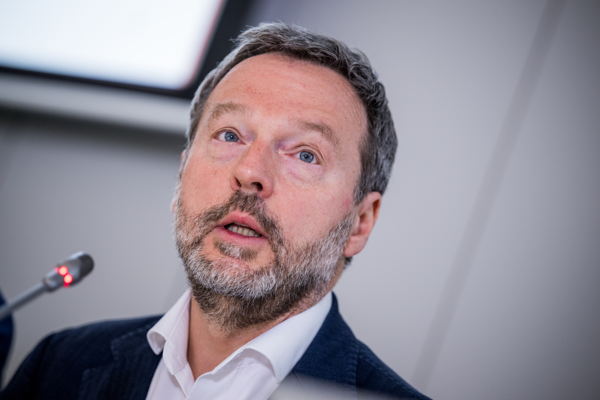
Jan Van Calster of insurance company Marsh conducted a specific risk analysis for Belgium based on the WEF report, published on Wednesday.
Globally, the biggest short-term risks are geo-economic confrontations, armed conflicts between states, extreme weather, polarisation in society, and misinformation and disinformation. Van Calster points out that these risks certainly apply to Belgium.

“Belgium is a distinctly open and export-oriented economy, and that is precisely what makes us extra vulnerable in an increasingly uncertain world,” he says.
“Geopolitical tensions, sanctions against countries, borders closing again: these are no longer abstract risks. Many CEOs today are asking themselves who they can still trade with reliably, not only outside Europe but sometimes even within the European Union. That makes doing business from Belgium more complex than ever.”
Need for stability
According to Van Calster, companies need stability to decide where to invest, which markets to approach and how to shape their strategy, while 2026 brings mainly uncertainty. Inflation remains a major concern for Belgian companies, although this receives less attention in the WEF’s report.
"Geopolitical tensions, sanctions against countries, borders closing again: these are no longer abstract risks"
“This economic uncertainty also has an impact on society,” he says. “Inflation and loss of purchasing power widen the gap between groups in society and can increase social tensions and polarisation – risks that in turn have economic consequences.”
Finally, he points out that climate and environmental risks are receiving less attention in the short term because companies are facing more immediate challenges. Nevertheless, they remain relevant. The same applies to critical infrastructure. Energy and communication links in the North Sea, ports and coastal areas are particularly vulnerable to climate change and geopolitical tensions.
Growing concerns
For its Global Risks Report, the WEF surveys 1,300 leaders and experts from academia, business, government, international organisations and civil society and draws up a list of 33 risks, for the short term of two years and the long term of 10 years.
Geo-economic confrontations top the short-term ranking. Increasing rivalry and protracted conflicts pose a threat to supply chains and global economic stability.
Economic risks are the biggest climbers in the short-term ranking. Growing concerns about debt levels and potential bubbles in financial markets against a backdrop of geo-economic tensions could herald a new phase of instability, the report says.

As other risks become more urgent, climate risks have fallen in the short-term ranking. In the long term, extreme weather conditions, biodiversity loss and critical changes on Earth are at the top of the list.
“However, there is a risk that if we lose sight of the short-term focus on climate, the consequences will be even greater in the longer term,” warns Saadia Zahidi, WEF managing director.
The WEF's annual meeting take places in Davos-Klosters from 19-23 January.
Delegates at the World Economic Forum in Davos, January 2025 © PHOTO FABRICE COFFRINI / AFP
Related news