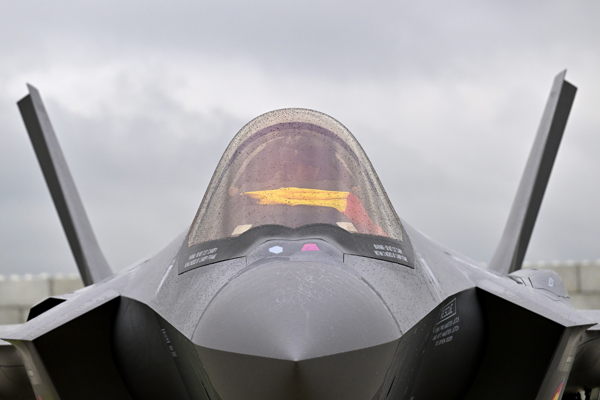
Belgium inaugurates F-35 tail unit production line at Sonaca

The first production line for the horizontal tail units of the F-35 fighter jet was officially inaugurated on Thursday at the Sonaca aerospace site in Gosselies. The F-35 programme is expected to create 200 jobs in Belgium and generate 400 million euros in economic returns.
The tail surfaces - critical components at the rear of the aircraft that ensure stability during flight - are finally assembled by Belgian aerospace company Sonaca in Gosselies. The technology is the product of a Belgian industrial collaboration: Asco Industries manufactures the metal components that form the internal skeleton of the tail surfaces, while Sabca produces the large composite panels that encase it.
The three companies, together with the Belgian State's Federal Participation and Investment Company (SFPIM), form the BeLightning consortium. SFPIM provided approximately half of the total capital, which amounted to nearly 200 million euros, a large portion of which was invested in Sonaca and the construction of the new factory.
"Peace thru Strength"
Prime minister Bart De Wever and Defence minister Theo Francken attended Wednesday's ceremony, alongside US ambassador Bill White. Following a private tour of the factory, the dignitaries each signed the first tail section to come off the production line. De Wever wrote "Si vis pacem, para bellum" - Latin for "if you want peace, prepare for war," while Francken wrote "Freedom!" White wrote, on behalf of US president Donald Trump, "Peace thru Strength!"
Participating in F-35 production allows Belgium "not only to be a consumer, but also an active player in its own security", De Wever said in his speech. The prime minister expressed hope that the inauguration would "remind us that security is not built through isolationism, but through partnership." He concluded his speech with the words "Long live NATO, forever."
While the order is placed with US company Lockheed Martin, "this is not a traditional purchase from an American supplier," Francken argued. "Belgian tail surfaces, German fuselage sections, front components from Finland and Italian assembly demonstrate that the programme now relies on an extensive European industrial network."

© BELGA PHOTO DIRK WAEM
Related news