Asylum: More international criminals identified but deporting proves difficult

The number of people losing their right to asylum in Belgium because they have violated human rights in their home country has increased tenfold in 10 years. Those who are rejected often cannot be deported or prosecuted, De Standaard reports.
In 2025, the federal public prosecutor’s office opened 83 investigations into violations of international humanitarian law. A total of 203 investigations into genocide, crimes against humanity and war crimes were under way by the end of the year. However, the public prosecutor’s office lacks the resources and capacity to follow up each case.
More than 34,000 people filed an application for international protection last year at the Immigration Office. These applications are sent to the Office of the Commissioner General for Refugees and Stateless Persons (CGRS), which decides if asylum should be granted.
Subsidiary protection
Those rejected because of involvement in violations of international humanitarian law or other serious crimes in their home country are referred to as 1F cases, after the article in the Refugee Convention. This states that anyone who fears persecution but has themselves committed crimes against humanity, war crimes or other serious offences is not entitled to refugee status or subsidiary protection.
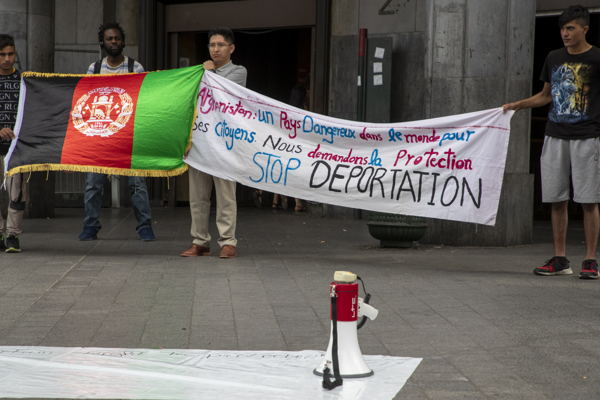

However, as there is often a high risk of persecution or inhuman treatment in their home country, they cannot usually be deported and they end up in a legal limbo. They can try to obtain a residence permit on the basis of family reunification or humanitarian regularisation, but in practice the chance of being accepted is very small.
The number of 1F exclusions increased from 14 in 2015 to 134 in 2025. The majority of cases are referred to the federal public prosecutor’s office. Between September 2025 and March 2026, a total of 48 cases were referred.
Human trafficking
Cases cover a wide range of offences. The oldest and most notorious concerned Rwanda, where, following the 1994 genocide, not only victims fled the country but also those who committed atrocities. Now, cases involve human trafficking, violence, child marriages and serious drug offences, with the majority of perpetrators coming from Afghanistan and Eritrea.
Not everyone excluded by the CGRS can subsequently be prosecuted. It may be impossible to link specific facts to an individual or to find evidence or witnesses, and cooperation with countries of origin can be difficult.

In Syria, the CGRS is working with a local NGO to track down members of the Assad regime, but investigations are labour-intensive and require a great deal of expertise.
The federal public prosecutor’s office makes a number of proposals in its annual report, such as increasing the number of investigators and magistrates who can be deployed for this type of case. It also proposes appointing a specialised investigating judge in international humanitarian law and setting up a unit of specialised investigators within the federal judicial police.
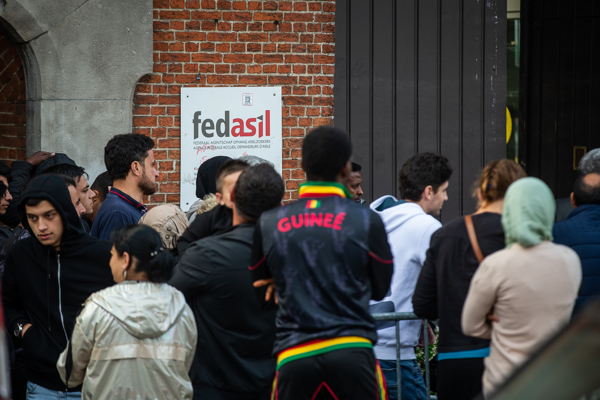
A refugee camp in Brussels © BELGA PHOTO LAURIE DIEFFEMBACQ
Related news